Estimated tax payments are one of those deadlines that sneak up on business owners. Remember, estimated tax payments due June 15 2026 are especially important to keep on your calendar this year.
You are running payroll, managing clients, reviewing cash flow, paying vendors, handling sales, and trying to grow the business. Then suddenly, it is mid-June and the IRS is looking for the next quarterly estimated tax payment.
For 2026, the second estimated tax payment is due June 15, 2026.
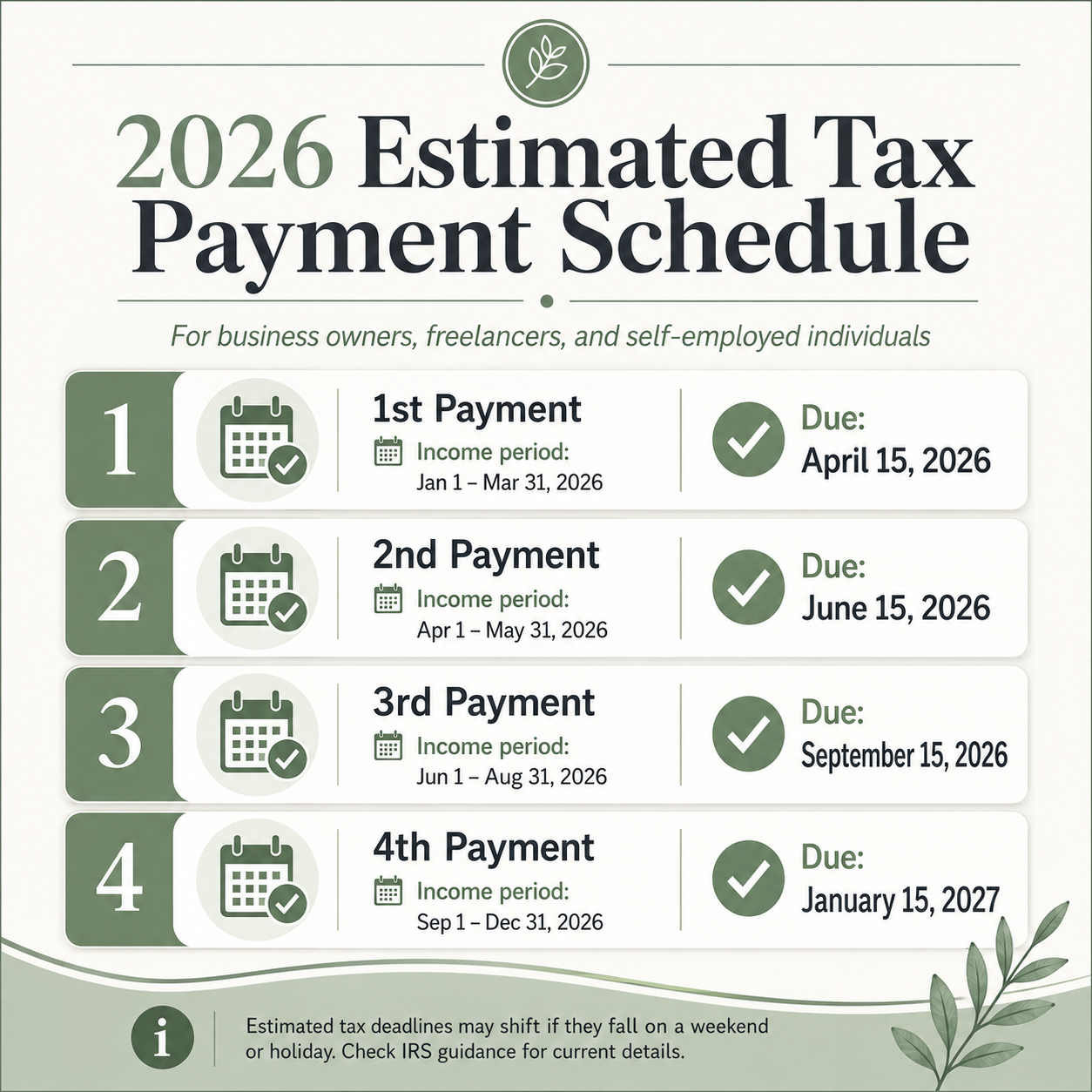
According to the IRS, estimated tax payments are divided into four payment periods. The second payment period covers income earned from April 1 through May 31, and the payment for that period is due June 15. The IRS also states that taxpayers may be charged a penalty if they do not pay enough tax by the due date for each payment period, even if they are due a refund when they file their annual return.
What Are Estimated Tax Payments?
Estimated tax payments are tax payments made throughout the year on income that is not subject to regular withholding.
For many business owners, this may include:
Business profit
Self-employment income
Rental income
Partnership income
S corporation pass-through income
Capital gains
Investment income
Side income or consulting income
In simple terms, if taxes are not automatically withheld from your income, the IRS generally expects you to pay taxes throughout the year instead of waiting until your annual tax return is filed.
This is why estimated tax planning matters. It is not just a tax task. It is a cash flow discipline.
Who Needs to Make Quarterly Estimated Tax Payments?
Quarterly estimated tax payments commonly apply to:
Self-employed individuals
Independent contractors
Freelancers
Small business owners
Partners in partnerships
S corporation shareholders
Landlords with rental income
Individuals with investment or capital gain income
Business owners are often surprised by estimated tax payments because the money may still be sitting in the bank account. But cash in the bank does not automatically mean the business is ahead.
Some of that cash may already belong to payroll, vendors, debt payments, sales tax, income tax, or future operating needs.
That is why clean books and proactive planning are so important. You cannot make a smart estimated tax decision from a bank balance alone.
Why the June 15, 2026 Estimated Tax Deadline Matters
The June 15 estimated tax deadline is easy to miss because “quarterly taxes” do not follow a perfect three-month schedule.
The IRS estimated tax payment schedule is:
| Payment Period | Due Date |
|---|---|
| January 1 – March 31 | April 15 |
| April 1 – May 31 | June 15 |
| June 1 – August 31 | September 15 |
| September 1 – December 31 | January 15 of the following year |
The second estimated tax payment period is only two months long, which is why the June 15 deadline can feel like it comes fast. The IRS notes that when an estimated tax due date falls on a Saturday, Sunday, or legal holiday, the payment is considered timely if it is made on the next business day.
For 2026, June 15 falls on a Monday, so business owners should plan for that exact deadline.
What Happens If You Miss an Estimated Tax Payment?
Missing an estimated tax payment, or paying too little, may result in an IRS underpayment penalty.
This is where many business owners get tripped up.
They assume that as long as everything gets fixed when the tax return is filed, they are fine. But the IRS generally expects taxes to be paid as income is earned. Waiting until the end of the year may create penalties, even if the final return shows that you are due a refund.
That does not mean every quarterly estimated tax payment will be perfect. Business income changes. Expenses fluctuate. Cash flow is uneven. But ignoring estimated taxes entirely can create unnecessary stress, penalties, and surprise tax bills.
Estimated Tax Payments Are a Cash Flow Issue
Estimated tax payments should not be treated like a random bill that shows up four times a year.
They should be built into your financial rhythm.
Before the June 15, 2026 estimated tax deadline, business owners should be asking:
Are my books current through May?
How much profit has the business actually earned this year?
Has income increased or decreased compared to last year?
Have I set aside cash for taxes?
Am I using tax money to fund operations?
Do I need to coordinate with my CPA or tax preparer before making the payment?
This is where financial clarity matters.
Your bank account tells you how much cash you have today.
Your financials tell you what that cash actually means.
Do Not Confuse Profit With Cash
One of the biggest mistakes business owners make with estimated taxes is confusing profit with cash.
Profit and cash are not the same thing.
A business can be profitable and still feel tight on cash because of loan payments, owner draws, inventory purchases, slow collections, payroll timing, or large upcoming bills.
A business can also have cash in the bank and still be heading toward a tax problem because the cash has not been properly allocated.
Estimated tax planning forces business owners to look at both profitability and liquidity.
That is why bookkeeping is not just about recording transactions. It is about giving business owners the information they need to make better decisions.
How to Pay Estimated Taxes
The IRS allows taxpayers to make estimated tax payments online, by phone, or through the IRS2Go mobile app. Business owners can review payment options through the IRS payment portal.
Before making a payment, it is a good idea to confirm the amount with your CPA, tax preparer, or tax advisor, especially if your income has changed significantly during the year.
Outgrow Accounting does not replace your tax preparer, but we do help business owners keep their books current, understand profitability, and prepare for better tax conversations.
Estimated Tax Planning Starts With Clean Books
The best way to prepare for quarterly estimated tax payments is to keep your books updated throughout the year.
When your financials are current, you can better understand:
How much profit the business has earned
How much cash is actually available
Whether your tax reserve is on track
How owner draws are affecting cash flow
Whether expenses are being categorized correctly
What information your CPA needs before estimating payments
If your books are behind, estimated tax payments become a guessing game.
And guessing is not a strategy.
Final Reminder: June 15, 2026 Estimated Tax Payment Deadline
The second 2026 estimated tax payment is due June 15, 2026.
This payment generally applies to income earned from April 1 through May 31. If you are a business owner, freelancer, independent contractor, partner, S corporation shareholder, or someone with income not subject to withholding, this deadline may apply to you.
Estimated tax payments are not just about staying compliant with the IRS.
They are about building financial discipline into your business.
At Outgrow Accounting, we help business owners outgrow the guesswork by keeping their books clean, their financials current, and their cash flow easier to understand.
Because when your numbers are organized, tax deadlines become a lot less dramatic.
Leave a Reply